

Market Overview:
The Food Acidulants Market is experiencing steady expansion, driven by Growing Demand for Processed and Convenience Foods, Increasing Health Consciousness Among Consumers and Rising Applications in Food Preservation. According to IMARC Group's latest research publication, "Food Acidulants Market: Global Industry Trends, Share, Size, Growth, Opportunity and Forecast 2025–2033", The global food acidulants market size reached USD 3.1 Billion in 2024. Looking forward, IMARC Group expects the market to reach USD 4.6 Billion by 2033, exhibiting a growth rate (CAGR) of 4.34% during 2025-2033.
This detailed analysis primarily encompasses industry size, business trends, market share, key growth factors, and regional forecasts. The report offers a comprehensive overview and integrates research findings, market assessments, and data from different sources. It also includes pivotal market dynamics like drivers and challenges, while also highlighting growth opportunities, financial insights, technological improvements, emerging trends, and innovations. Besides this, the report provides regional market evaluation, along with a competitive landscape analysis.
Grab a sample PDF of this report: https://www.imarcgroup.com/food-acidulants-market/requestsample
Our Report Includes:
Market Dynamics
Market Trends and Outlook
Competitive Analysis
Industry Segmentation
Strategic Recommendations
Growth Factors in the Food Acidulants Industry:
Growing Demand for Processed and Convenience Foods
The food acidulants market is increasingly shaped by the global shift toward urbanization and the consequent rise in convenience-driven consumption. As packaged meals and processed snacks become dietary staples, acidulants like citric and phosphoric acid are vital for maintaining microbial safety and flavor consistency. Manufacturers are scaling the use of these additives to ensure that ready-to-eat products withstand complex global supply chains. This demand is further amplified by the expansion of the beverage sector, where acidulants provide the necessary "tang" and pH stability required for carbonated soft drinks and functional juices.
Increasing Health Consciousness Among Consumers
Modern consumers are scrutinizing ingredient lists, creating a robust pivot toward bio-based and organic acidulants. This trend favors lactic and malic acids derived from natural fermentation over synthetic alternatives. Market leaders are responding by adopting "clean label" strategies, replacing artificial preservatives with fruit-derived acidity regulators to satisfy the wellness-oriented demographic. Beyond preservation, these natural acidulants are being marketed for their secondary health benefits, such as metabolic support and antioxidant properties, aligning food science with the holistic nutrition movement currently dominating the retail landscape.
Rising Applications in Food Preservation
Acidulants remain the primary defense against foodborne pathogens and enzymatic browning in the global food trade. By lowering the pH of food matrices, these compounds inhibit the growth of Listeria and Salmonella, which is critical for the export of meat and dairy products. As international food safety regulations become more stringent, the reliance on acidulants to extend shelf life without compromising nutritional integrity has surged. This is particularly evident in the frozen food and bakery sectors, where precise acidity control is essential for preventing spoilage during long-term storage and distribution.
Key Trends in the Food Acidulants Market
Shift Toward Natural and Organic Acidulants
The industry is witnessing an aggressive transition toward "green" chemistry, where traditional chemical synthesis is being replaced by high-yield microbial fermentation. Manufacturers are increasingly utilizing non-GMO substrates and sustainable feedstocks to produce organic-certified citric and tartaric acids. This shift is not merely a response to consumer preference but also a strategic move to align with global sustainability mandates and reduce the carbon footprint of chemical processing. Consequently, investment in biotechnology for sourcing acidulants from agricultural side-streams is becoming a cornerstone of competitive differentiation for major market players.
Expansion in Functional Food Applications
Acidulants are evolving from passive preservatives into active functional components within the burgeoning nutraceutical sector. Emerging formulations utilize malic and fumaric acids not only for flavor balancing but also for their roles in the Krebs cycle to enhance physical endurance in sports nutrition. Additionally, the rise of fortified beverages has increased the demand for specialized acidulants that can mask the metallic aftertaste of added minerals and vitamins. This dual-functionality is driving collaborative R&D between acidulant suppliers and health-food brands to create synergistic blends that improve both stability and nutrient bioavailability.
Development of Microencapsulated Acidulant Technologies
Technological innovation is centered on microencapsulation, a process that shields acidulants within a protective coating to prevent premature reaction with other ingredients. This is a game-changer for the bakery and confectionery industries; for instance, encapsulated malic acid prevents the "sugar melt" in sour candies by delaying acid release until consumption. In meat processing, this technology allows for controlled acidification, ensuring optimal texture development without denaturing proteins during the initial mixing phase. These advanced delivery systems are significantly enhancing product quality, reducing ingredient waste, and allowing for more complex flavor profiles in high-moisture food environments.
Leading Companies Operating in the Global Food Acidulants Industry:
Archer Daniels Midland Company
Bartek Ingredients Inc.
Batory Foods Inc.
Cargill Incorporated
Corbion N.V.
FBC Industries Inc.
Hawkins Watts Limited
Isegen South Africa (Pty) Ltd.
Jungbunzlauer Suisse AG
MegaChem Ltd.
Food Acidulants Market Report Segmentation:
Breakup by Type:
Citric Acid
Acetic Acid
Lactic Acid
Malic Acid
Phosphoric Acid
Tartaric Acid
Others
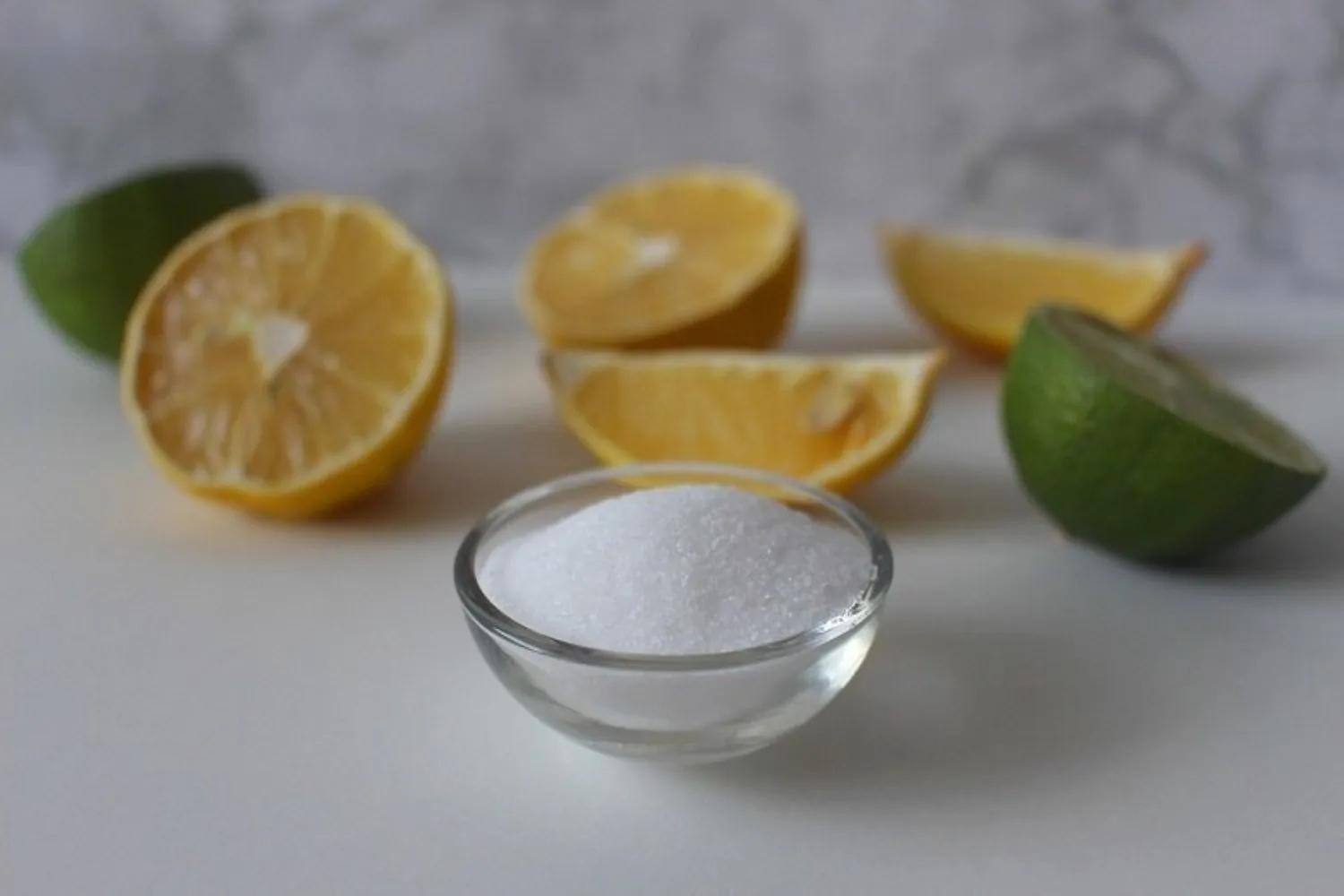
Citric acid represents the largest segment due to its wide applications in beverages, confectionery, and processed foods as a natural preservative and flavor enhancer.
Breakup by Form:
Liquid
Powder
Powder accounts for the majority of the market share
Breakup by Application:
Beverages
Confectionery
Dairy Products
Bakery Products
Processed Foods
Others
Beverages dominate the market due to extensive use of acidulants for pH regulation, flavor enhancement, and preservation in soft drinks and juices.
Breakup by Function:
Preservatives
pH Control Agents
Flavor Enhancers
Others
Preservatives represent the largest functional segment as acidulants play critical roles in extending shelf life and maintaining food safety.
Breakup by Region:
North America (United States, Canada)
Asia Pacific (China, Japan, India, South Korea, Australia, Indonesia, Others)
Europe (Germany, France, United Kingdom, Italy, Spain, Russia, Others)
Latin America (Brazil, Mexico, Others)
Middle East and Africa
Asia Pacific leads the market driven by large food processing industries, growing population, and increasing consumption of processed foods in China and India.
Note: If you require specific details, data, or insights that are not currently included in the scope of this report, we are happy to accommodate your request. As part of our customization service, we will gather and provide the additional information you need, tailored to your specific requirements. Please let us know your exact needs, and we will ensure the report is updated accordingly to meet your expectations.
About Us:
IMARC Group is a global management consulting firm that helps the world’s most ambitious changemakers to create a lasting impact. The company provide a comprehensive suite of market entry and expansion services. IMARC offerings include thorough market assessment, feasibility studies, company incorporation assistance, factory setup support, regulatory approvals and licensing navigation, branding, marketing and sales strategies, competitive landscape and benchmarking analyses, pricing and cost research, and procurement research.
Contact Us:
IMARC Group
134 N 4th St. Brooklyn, NY 11249, USA
Email: [email protected]
Tel No:(D) +91 120 433 0800
United States: +1–201971–6302