

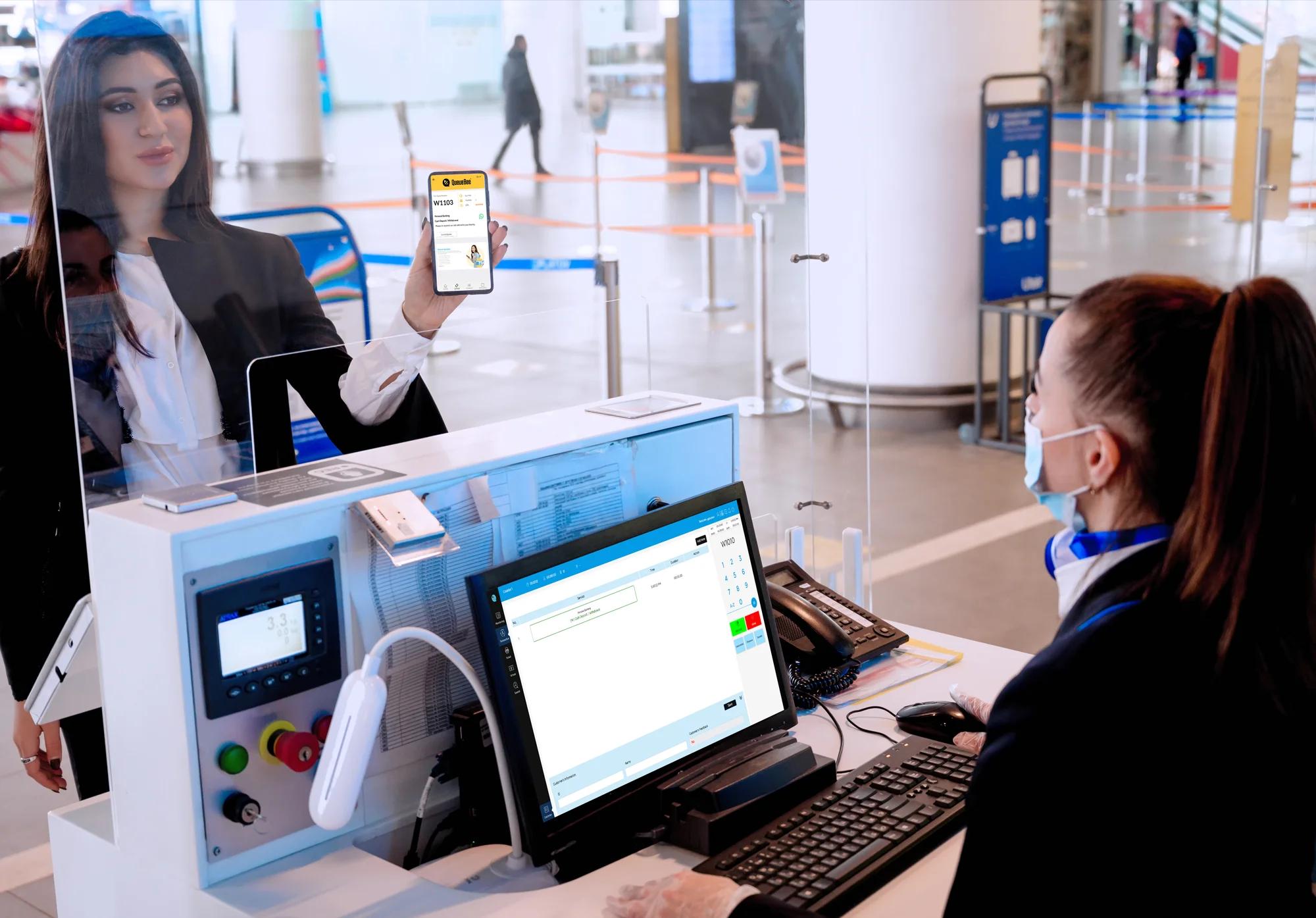
Market Overview:
The queue management system market is experiencing steady growth, driven by Rising Adoption in Healthcare Industry, Growing Demand for Enhanced Customer Engagement and Increasing Demand for Customer Traffic Management. According to IMARC Group's latest research publication, "Queue Management System Market: Global Industry Trends, Share, Size, Growth, Opportunity and Forecast 2025-2033", The global queue management system market size reached USD 598.4 Million in 2024. Looking forward, IMARC Group expects the market to reach USD 861.3 Million by 2033, exhibiting a growth rate (CAGR) of 3.92% during 2025-2033.
This detailed analysis primarily encompasses industry size, business trends, market share, key growth factors, and regional forecasts. The report offers a comprehensive overview and integrates research findings, market assessments, and data from different sources. It also includes pivotal market dynamics like drivers and challenges, while also highlighting growth opportunities, financial insights, technological improvements, emerging trends, and innovations. Besides this, the report provides regional market evaluation, along with a competitive landscape analysis.
Download a sample PDF of this report: https://www.imarcgroup.com/queue-management-system-market/requestsample
Our report includes:
Market Dynamics
Market Trends And Market Outlook
Competitive Analysis
Industry Segmentation
Strategic Recommendations
Growth Factors in the Queue Management System Industry:
Rising Adoption in Healthcare Industry
The expanding adoption of queue management systems in the healthcare sector is accelerating market demand for efficient patient flow management solutions. These systems assist healthcare facilities in handling patient queries seamlessly while minimizing the risk of disease transmission through reduced physical contact and overcrowding. Hospitals and clinics are implementing queue management solutions to optimize appointment scheduling, reduce waiting room congestion, and enhance patient experience. The technology enables healthcare providers to manage emergency and routine patient flow effectively, ensuring better resource allocation and staff productivity. Virtual queuing capabilities allow patients to wait remotely, checking in digitally and receiving notifications when their turn approaches. This is particularly valuable in managing chronic disease patients, vaccination drives, and diagnostic center operations. The COVID-19 pandemic significantly accelerated this trend, with healthcare institutions prioritizing contactless solutions. Queue management systems also provide valuable data analytics on patient flow patterns, peak hours, and service delivery metrics, enabling healthcare administrators to make informed operational decisions and improve service quality across outpatient departments, pharmacies, and laboratory services.
Growing Demand for Enhanced Customer Engagement
The increasing utilization of queue management systems to enhance customer engagement is propelling market expansion across multiple industries. Organizations are recognizing that customer experience directly impacts brand loyalty and retention rates, making efficient queue management a strategic priority. These systems provide real-time updates on wait times, reducing customer frustration and uncertainty during service delivery. Interactive kiosks and mobile applications integrated with queue management platforms enable customers to check in, select services, and receive personalized notifications. Businesses can use these systems to communicate with customers through multiple channels, offering relevant information, promotional content, or service updates while they wait. The transparency provided by these solutions increases customer satisfaction by setting clear expectations and demonstrating respect for their time. Many systems now incorporate feedback mechanisms, allowing organizations to capture customer sentiment immediately after service interactions. This immediate feedback loop enables businesses to identify service gaps and implement improvements rapidly. The personalization capabilities of modern queue management systems allow organizations to recognize returning customers, prioritize VIP clients, and tailor service delivery based on individual preferences and historical interactions.
Increasing Demand for Customer Traffic Management
The rising need to effectively manage customer traffic and movement to boost productivity in stores and service centers is significantly driving market growth. Retailers, banks, and government offices face challenges in handling peak-hour crowds while maintaining service quality and operational efficiency. Queue management systems provide comprehensive solutions for monitoring customer flow, analyzing traffic patterns, and optimizing staff allocation based on real-time demand. These systems help businesses avoid store overcrowding, which can lead to poor customer experiences and potential safety concerns. By distributing customer load across service points and time slots, organizations can maximize facility utilization and reduce idle time for both staff and customers. The data generated by these systems offers insights into peak periods, average service times, and bottleneck identification, enabling managers to make strategic decisions about staffing levels and resource deployment. Many solutions now incorporate predictive analytics, forecasting customer volume based on historical data and external factors. This allows businesses to proactively prepare for busy periods and maintain consistent service levels. The integration of appointment scheduling with walk-in management provides flexibility for customers while giving businesses better control over their operations.
Key Trends in the Queue Management System Market
Growing Integration of Artificial Intelligence and Analytics
The integration of advanced technologies such as artificial intelligence (AI) and analytics into queue management systems is transforming how organizations handle customer service operations. AI-powered solutions provide real-time alerts and notifications to both customers and service providers, optimizing the entire service delivery process. Machine learning algorithms analyze historical data to predict customer arrival patterns, enabling businesses to anticipate demand fluctuations and adjust resources accordingly. These intelligent systems can automatically route customers to the most appropriate service points based on their requirements, staff expertise, and current workload distribution. Natural language processing capabilities enable chatbots and virtual assistants to handle initial customer queries, reducing the burden on physical service counters. Predictive analytics help identify potential bottlenecks before they occur, allowing managers to take preemptive action to maintain service flow. AI-driven systems can also personalize customer experiences by recognizing repeat visitors, understanding their preferences, and tailoring service delivery accordingly. The technology enables dynamic queue management, adjusting priorities based on factors such as customer value, urgency of need, and service complexity.
Rising Adoption of Cloud-Based Deployment Models
The shift toward cloud-based queue management solutions is gaining significant momentum as organizations seek scalable, cost-effective, and easily manageable systems. Cloud deployment offers numerous advantages over traditional on-premises installations, including reduced infrastructure costs, minimal maintenance requirements, and automatic software updates. These solutions provide businesses with the flexibility to scale operations up or down based on seasonal demand or business growth without significant capital investment. Cloud-based systems enable centralized management of multiple locations, allowing organizations with distributed operations to maintain consistent service standards and monitor performance across all sites from a single dashboard. The accessibility of cloud solutions facilitates remote monitoring and management, enabling managers to oversee operations from any location with internet connectivity. Integration capabilities with other business systems such as CRM platforms, appointment scheduling software, and customer databases are typically more seamless with cloud-based solutions. Small and medium-sized enterprises particularly benefit from cloud deployment as it eliminates the need for dedicated IT infrastructure and technical expertise.
Expansion of Virtual Queuing Solutions
The growing preference for virtual queuing over traditional linear queuing systems is reshaping customer service delivery across industries. Virtual queuing allows customers to join queues remotely through mobile applications or web portals, eliminating the need to physically wait in lines. This innovation significantly enhances customer convenience by enabling them to continue with other activities until their service slot approaches. Customers receive real-time notifications about their queue position and estimated wait times, allowing them to arrive at the service location at the optimal moment. This approach is particularly valuable in high-traffic environments such as government offices, theme parks, healthcare facilities, and retail stores during peak shopping seasons. Virtual queuing reduces physical crowding in waiting areas, improving safety and comfort for both customers and staff. The technology supports social distancing requirements, which became especially important during the pandemic and continues to be appreciated by health-conscious consumers. Organizations benefit from better space utilization as they require smaller physical waiting areas, potentially reducing real estate costs.
Leading Key Players Operating in the Queue Management System Industry:
Advantech Co. Ltd.
AKIS Technologies UAB
ATT Systems Group
Aurionpro Solutions Limited
Awebstar Technologies Pte Ltd.
MaliaTec (Malia Group)
QLess Inc.
Q-Matic AB
Q-nomy Inc.
Qudini Limited (Verint Systems Inc.)
Skiplino
XIPHIAS Software Technologies Pvt. Ltd.
Xtreme Media Pvt. Ltd
Queue Management System Market Report Segmentation:
Breakup By Offering:
Solution
Hardware
Software
Service
Professional Service
Managed Service
Solution accounts for the majority of shares due to growing demand for comprehensive hardware and software combinations that provide complete queue management capabilities, offering organizations end-to-end solutions for customer flow optimization.
Breakup By Deployment Model:
On-premises
Cloud-based
Cloud-based dominates the market on account of its scalability, cost-effectiveness, reduced infrastructure requirements, and ease of deployment, making it the preferred choice for organizations seeking flexible and easily manageable queue management solutions.
Breakup By Mode:
Virtual Queuing
Linear Queuing
Virtual queuing represents the majority of shares due to increasing consumer preference for remote check-in capabilities, enhanced convenience, and the ability to eliminate physical waiting, particularly accelerated by pandemic-driven contactless service requirements.
Breakup By Application:
Reporting and Analytics
Real-Time Monitoring
Appointment Management
Customer Service
Query Handling
In-Store Management
Others
Customer service dominates the market on account of the primary focus of queue management systems being the enhancement of customer experience, reducing wait times, and improving service delivery across various industries.
Breakup By Industry Vertical:
BFSI
Retail and Consumer Goods
Healthcare and Life Sciences
Government and Public Sector
IT and Telecom
Travel and Hospitality
Energy and Utilities
Others
Healthcare and life sciences represent the majority of shares due to critical need for efficient patient flow management, appointment scheduling, and infection control measures, making queue management systems essential infrastructure in medical facilities.
Breakup By Region:
North America (United States, Canada)
Asia Pacific (China, Japan, India, South Korea, Australia, Indonesia, Others)
Europe (Germany, France, United Kingdom, Italy, Spain, Russia, Others)
Latin America (Brazil, Mexico, Others)
Middle East and Africa
North America enjoys the leading position owing to high adoption rates of advanced technologies, presence of major market players, strong digital infrastructure, and widespread awareness about customer experience management across industries.
Note: If you require specific details, data, or insights that are not currently included in the scope of this report, we are happy to accommodate your request. As part of our customization service, we will gather and provide the additional information you need, tailored to your specific requirements. Please let us know your exact needs, and we will ensure the report is updated accordingly to meet your expectations.
About Us:
IMARC Group is a global management consulting firm that helps the world's most ambitious changemakers to create a lasting impact. The company provide a comprehensive suite of market entry and expansion services. IMARC offerings include thorough market assessment, feasibility studies, company incorporation assistance, factory setup support, regulatory approvals and licensing navigation, branding, marketing and sales strategies, competitive landscape and benchmarking analyses, pricing and cost research, and procurement research.
Contact Us:
IMARC Group
134 N 4th St. Brooklyn, NY 11249, USA
Email: [email protected]
Tel No:(D) +91 120 433 0800
United States: +1-201-971-6302